La Mère Catherine: Breakfast with Van Gogh and Cossacks in Montmartre
Where the Word “Bistro” Was Born
“Paris is Paris… the French air clears the brain and does good.” With Vincent Van Gogh’s words echoing in my mind, I found myself walking hypnotically up the cobbled hill, seeking out one of his old haunts.
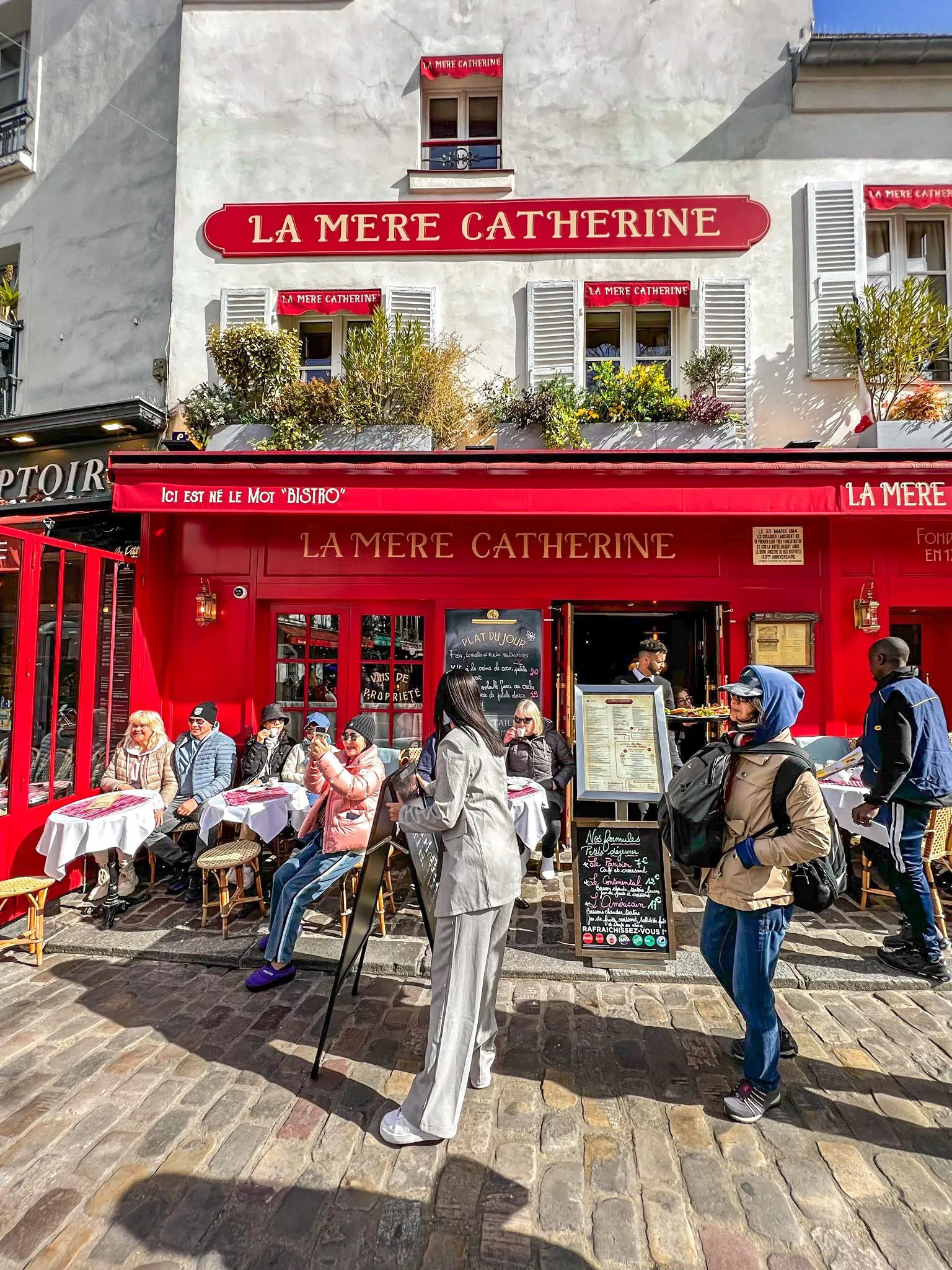
Montmartre can be a tourist trap, let’s be honest. But if you get the timing right, it is pure magic. I always make a point to arrive just as the city is waking up, escaping the hustle to find a quiet corner before the square fills with portrait artists and selfie sticks. My destination? The very spot where the word “Bistro” was invented: La Mère Catherine.
Quick Facts:
- 📍 Location: Place du Tertre, Montmartre (18th Arrondissement).
- 💶 Budget: Mid-range (you pay for the location, but the history is free).
- ✨ Vibe: Historic, lively, and unapologetically French.
- 🗓️ Best Time: Early morning for coffee, or evening for the live music atmosphere.
A Morning Ritual in the Oldest Cabaret
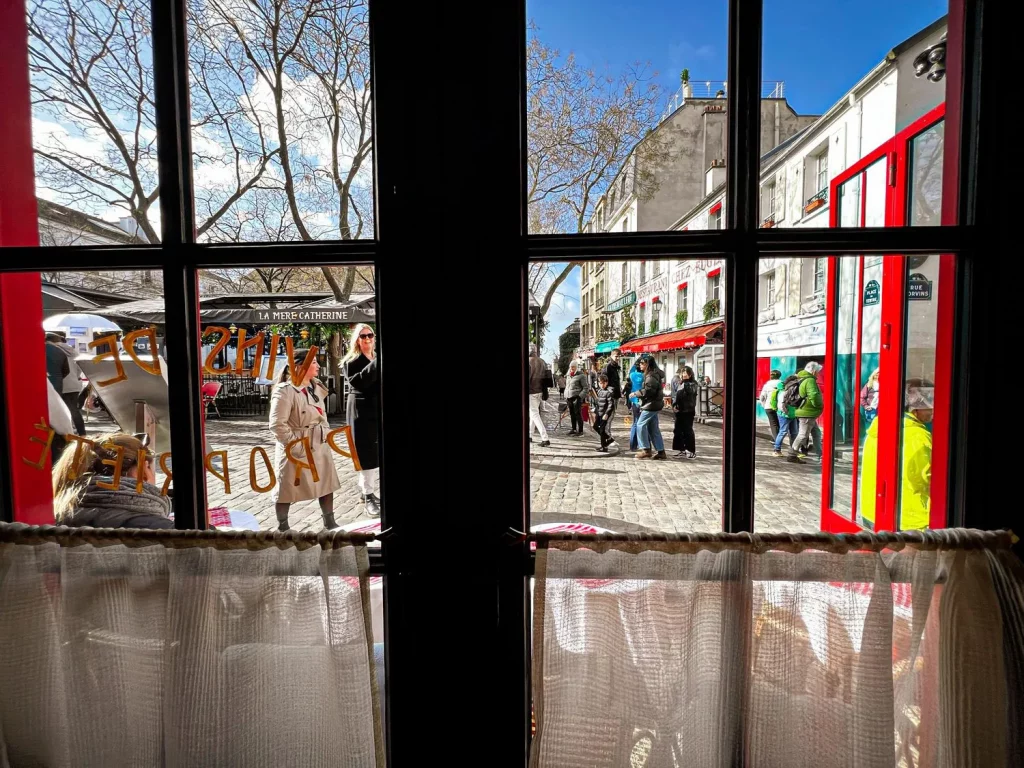
Walking across the threshold of a Montmartre café is like stepping into a time machine, and La Mère Catherine is the grandfather of them all. Founded in 1793, this place has seen regimes rise and fall.
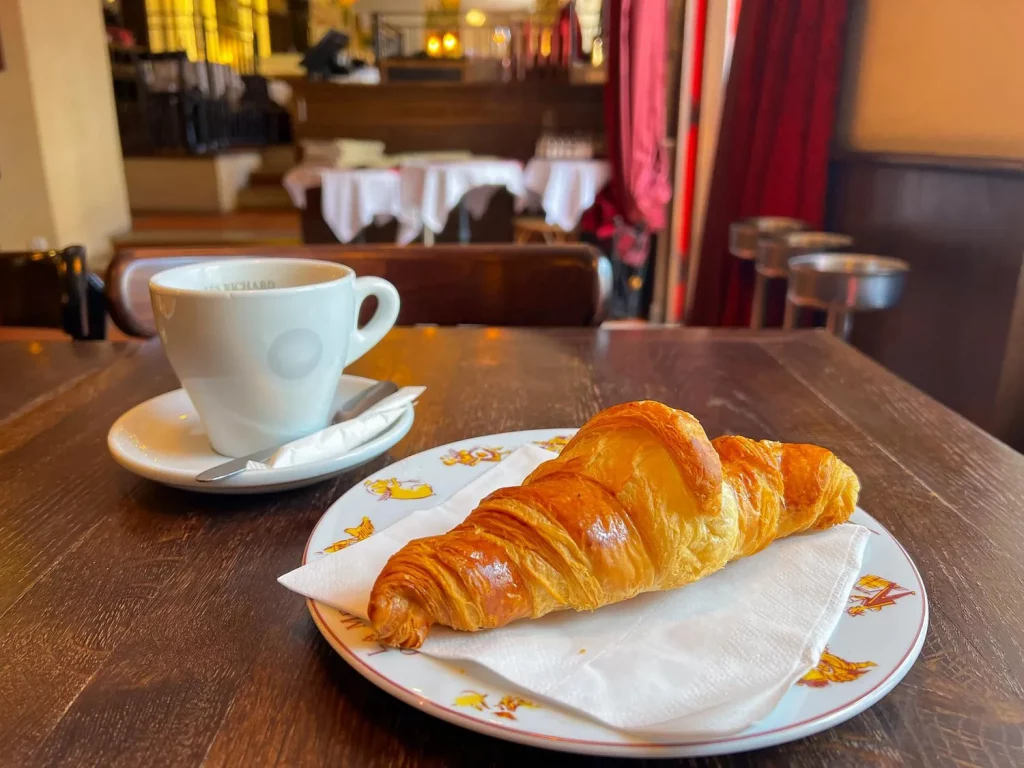
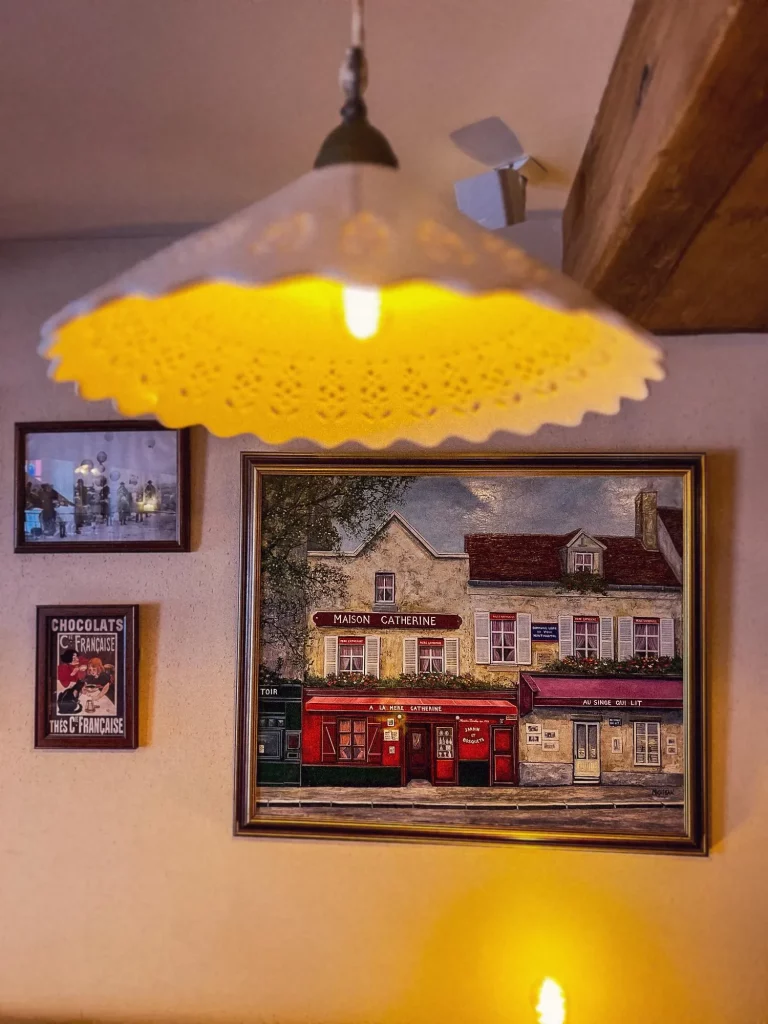
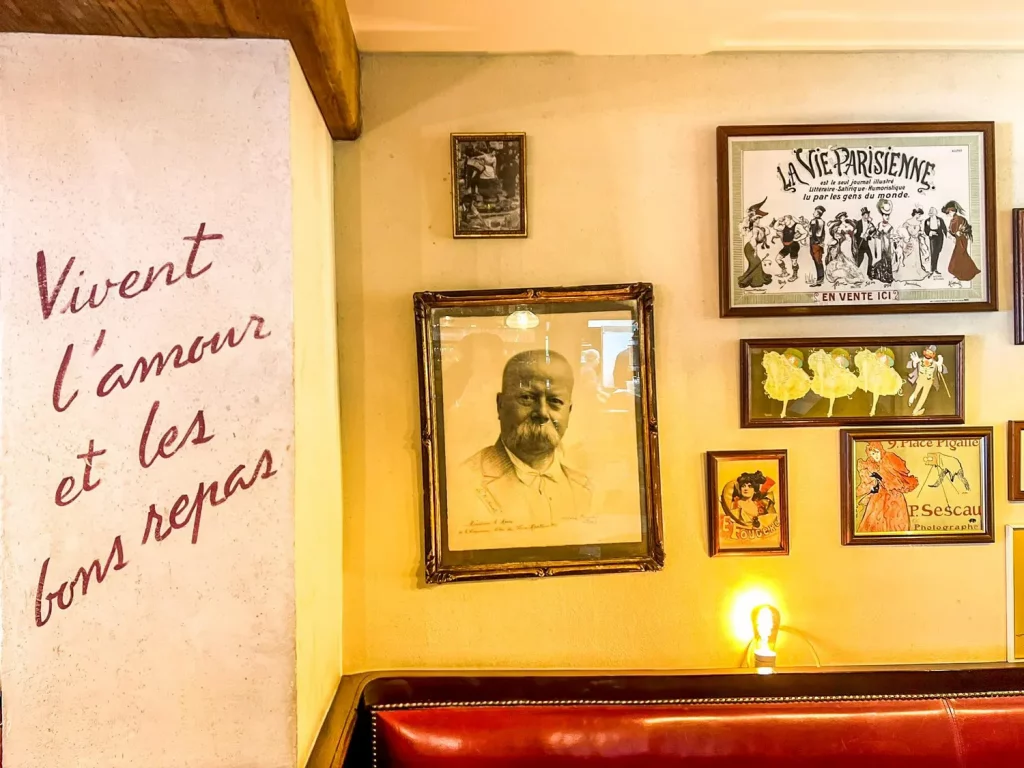
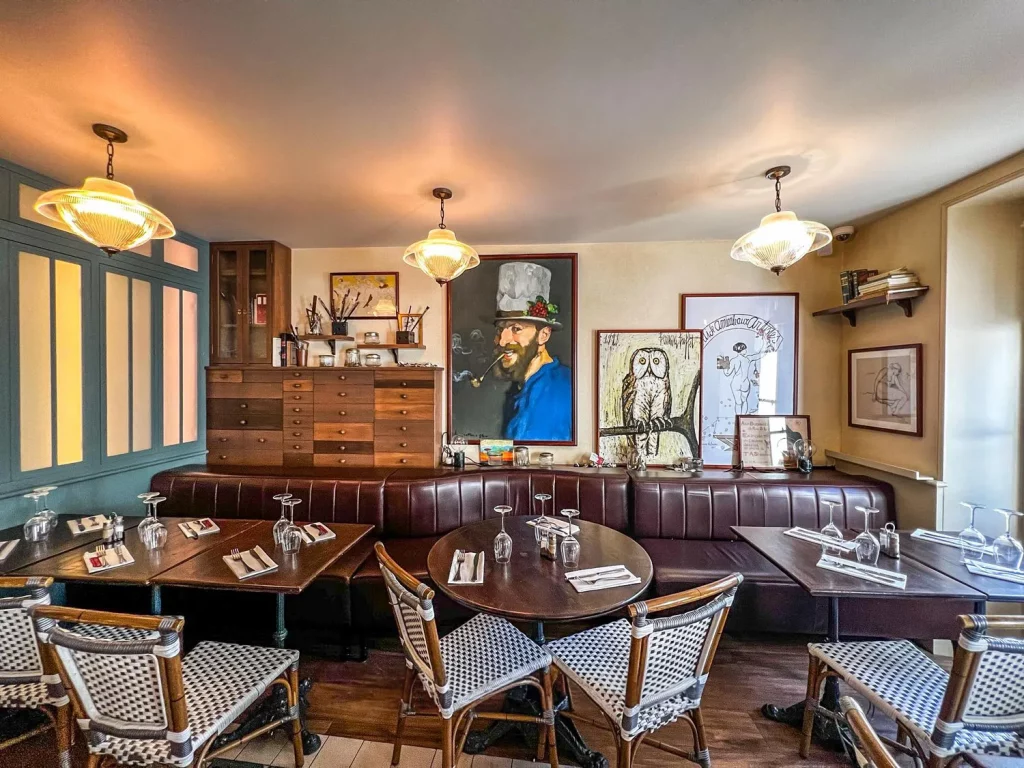
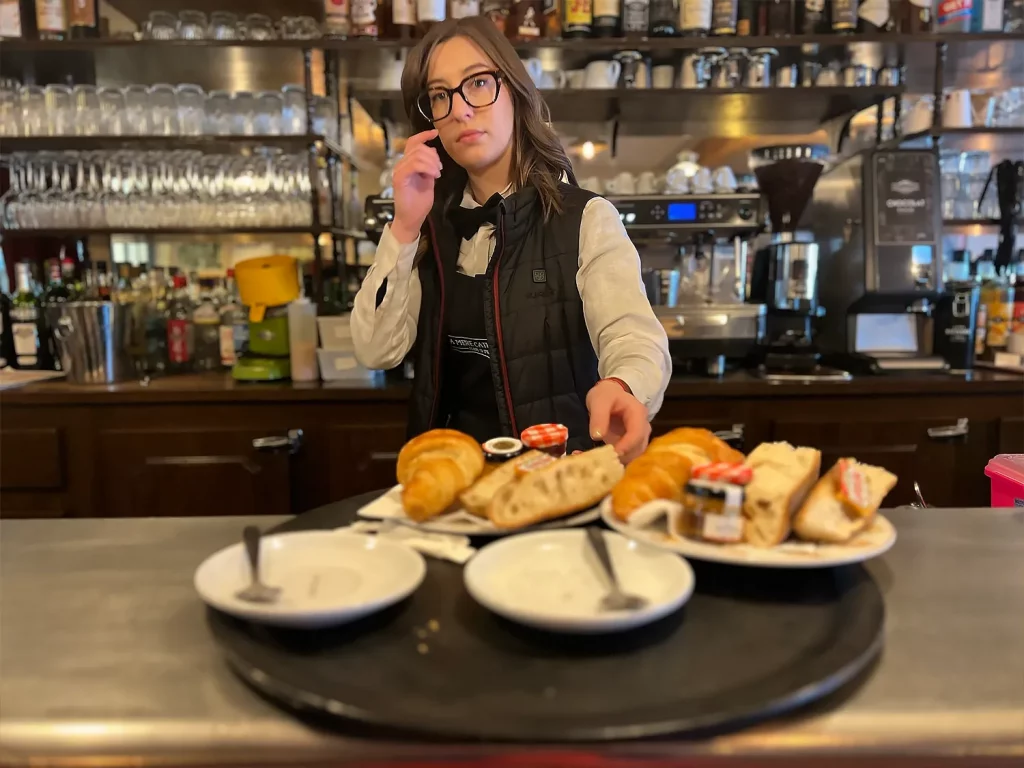
Under the soft, mischievous light of dawn, I sat down for the quintessential Parisian start: a beautifully browned croissant and a strong coffee. Every bite felt seasoned with centuries of stories. The aroma of fresh baking took me back to a time when this wasn’t a tourist hub, but a refuge for starving artists and fiery revolutionaries. Danton and his disciples drank here during the Revolution. The walls are laden with history, adorned with paintings of the Montmartre of yesteryear, wrapping you in a warm cloak of authenticity.
The Legend of “Bistro!”
You can’t visit La Mère Catherine without knowing the story of its most famous catchphrase. In March 1814, during the Battle of Paris and the fall of Napoleon, Russian Cossacks occupied the heights of Montmartre.
Legend has it they would sneak into La Mère Catherine for a drink, terrified of being caught by their officers. They would slam their fists on the table, shouting “Bistro! Bistro!”—Russian for “Quick! Quick!” The name stuck, and a global dining culture was born right here at these tables.
The Artistic Pilgrimage
From Van Gogh to Toulouse-Lautrec, they have all passed through these doors. In the late 19th and early 20th centuries, this wasn’t just a restaurant; it was a vibrant cultural centre.
Imagine Édouard Manet, Pablo Picasso, or Amedeo Modigliani arguing over art and politics in the corner. The atmosphere was bohemian, electric, and full of life. Today, each table serves as a silent memorial to those moments of genius that defined the artistic history of Paris.
Dining on the Hill
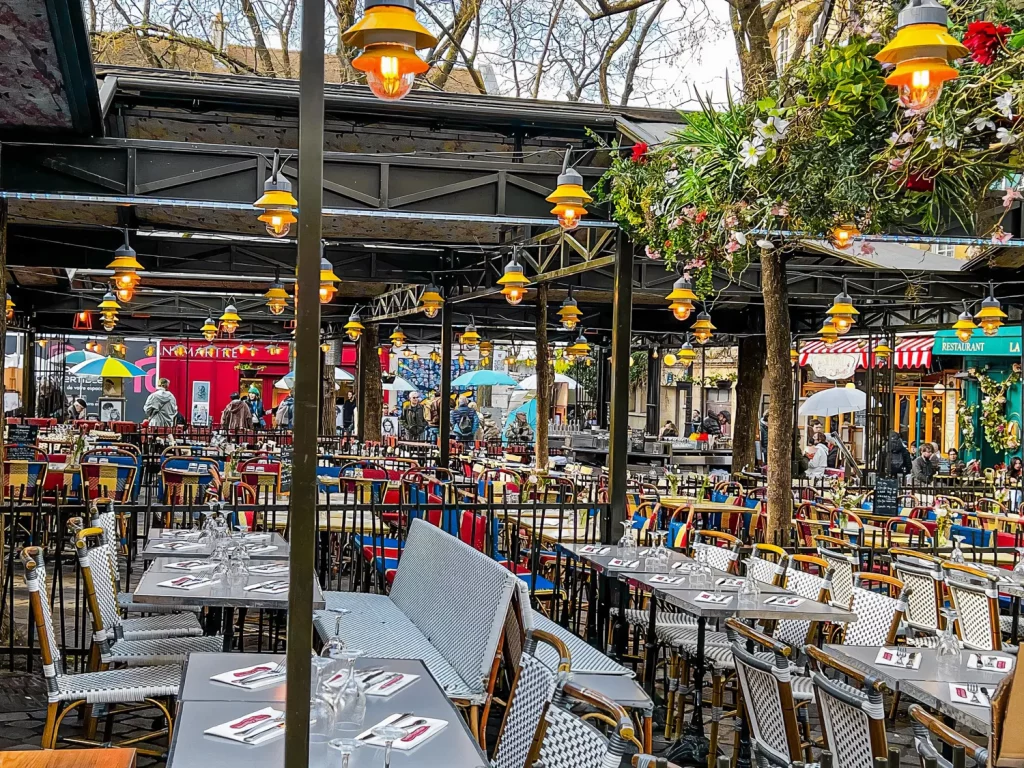
If the weather is on your side, skip the interior and grab a table in the garden or on the terrace facing the Place du Tertre. It is prime people-watching territory.
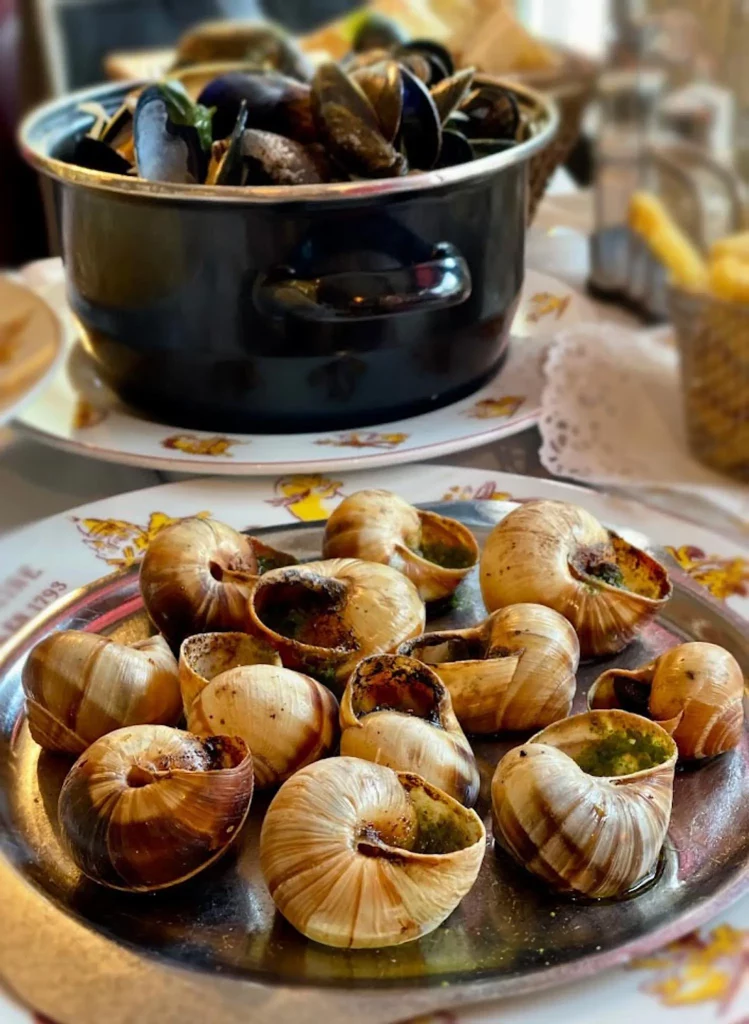
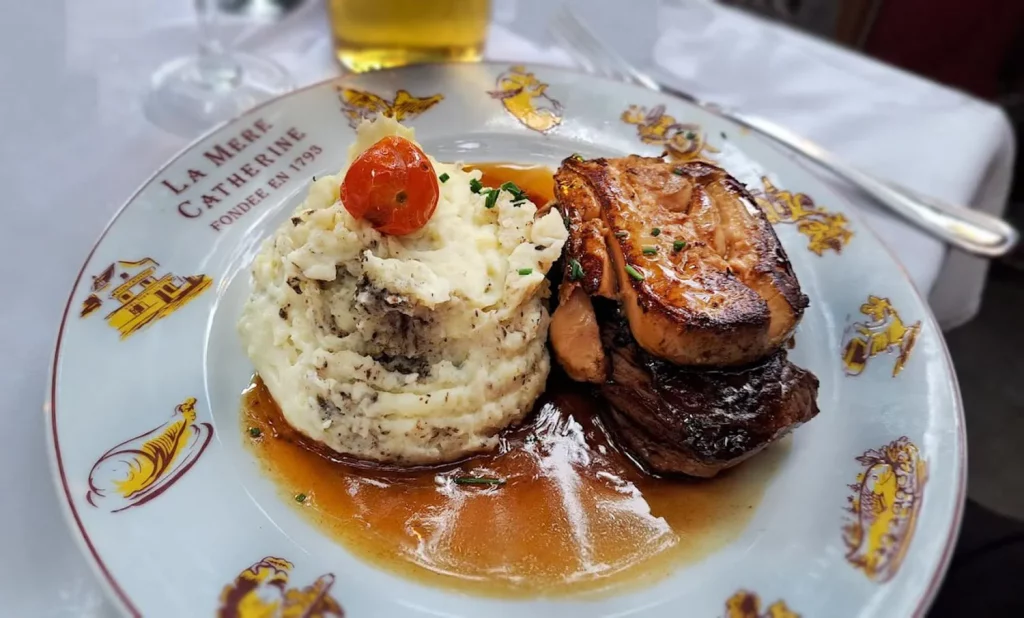
The menu is a greatest hits of French gastronomy. We are talking proper comfort food: onion soup with a thick crust of cheese, frogs’ legs, foie gras, and snails. For mains, the duck in Dauphinois sauce is a standout, and you can’t go wrong with a classic beef tartare. Just save room for a crème brûlée or a Tarte Tatin.
How to Get There (The Climb)
La Mère Catherine is just a stone’s throw from the Sacré-Cœur Basilica. To get there, take the Metro Line 2 (the Blue Line) to Anvers.
From there, you have a choice. You can embrace the full Montmartre experience and climb the steep stairs (great for the calves), or, if you want to save your energy for exploring, take the funicular up the hill.
Highlights (Things to Do)
- ✅ The History: Founded in 1793, it’s one of the oldest spots on the hill.
- ✅ The Story: The birthplace of the word “Bistro” (thanks to thirsty Russians).
- ✅ The Famous Faces: A former hangout for Van Gogh, Picasso, and Toulouse-Lautrec.
- ✅ The Food: Classic French staples like onion soup and snails.
- ✅The Location: Right on the famous Place du Tertre, steps from Sacré-Cœur.
🚶 The “Post-Croissant” Art Stroll: From Bistro to Van Gogh’s Doorstep
Duration: 20–30 minutes (leisurely pace)
Since you are already starting at the birthplace of the bistro, why not walk off that croissant by following in Vincent’s actual footsteps? This short route takes you from the tourist bustle of Place du Tertre to the quieter street where Van Gogh lived and painted.
1. Start: La Mère Catherine (Place du Tertre). Leave the restaurant and head west out of the square onto Rue Norvins. Resist the urge to buy a beret from the souvenir shops; instead, look for the quiet charm of the old village.
2. The Man Who Walked Through Walls (Place Marcel Aymé). 5-minute walk. Follow Rue Norvins until it curves into Place Marcel Aymé. Stop to admire the bizarre statue of a man literally stuck halfway through a stone wall. It’s a tribute to the writer Marcel Aymé and his famous character, Dutilleul—a perfect photo op.
3. The Last Windmills (Rue Lepic). 3-minute walk. Continue onto Rue Girardon and turn left onto Rue Lepic. Suddenly, you’ll see the sails of the Moulin de la Galette. This is one of the last surviving windmills in Paris and the subject of Renoir’s famous masterpiece. It was a dance hall in Van Gogh’s day, and you can easily imagine the 19th-century bohemians stumbling out of here at dawn.
4. Van Gogh’s Apartment (54 Rue Lepic). 2-minute walk. Walk down the winding Rue Lepic. Stop at Number 54. There is no museum here, just a simple blue plaque on the wall. This is where Vincent lived with his brother, Theo, from 1886 to 1888. On the third floor, in a small studio, he painted some of his most famous self-portraits and views of Paris. Stand on the opposite pavement and look up—it’s chilling to think of the genius that once looked out of those very windows.
5. Finish: The “Amélie” Café. 5-minute walk. If you still have room for a second coffee, continue down the hill to the Café des Deux Moulins (15 Rue Lepic). It’s famous as the filming location for Amélie, but it’s also just a classic neighbourhood spot to end your tour.